iPhone Duo Silicone vs Kickstand Cases: Which to Stock?
Both iPhone Duo cases cover the hinge and snap to MagSafe. One feels soft and premium; the other adds a stand. This guide shows which one your channel should stock first.
Both iPhone Duo cases in our range cover the hinge and snap to MagSafe. The difference is not protection — it is what the case feels like in the hand, and whether it stands up on a desk. Pick the wrong one and you do not get a broken case. You get the complaint that follows it: "where is the stand?" from a customer who expected one, or "why does it pick up lint?" from a customer who did not expect silicone to behave like silicone.
At a glance:
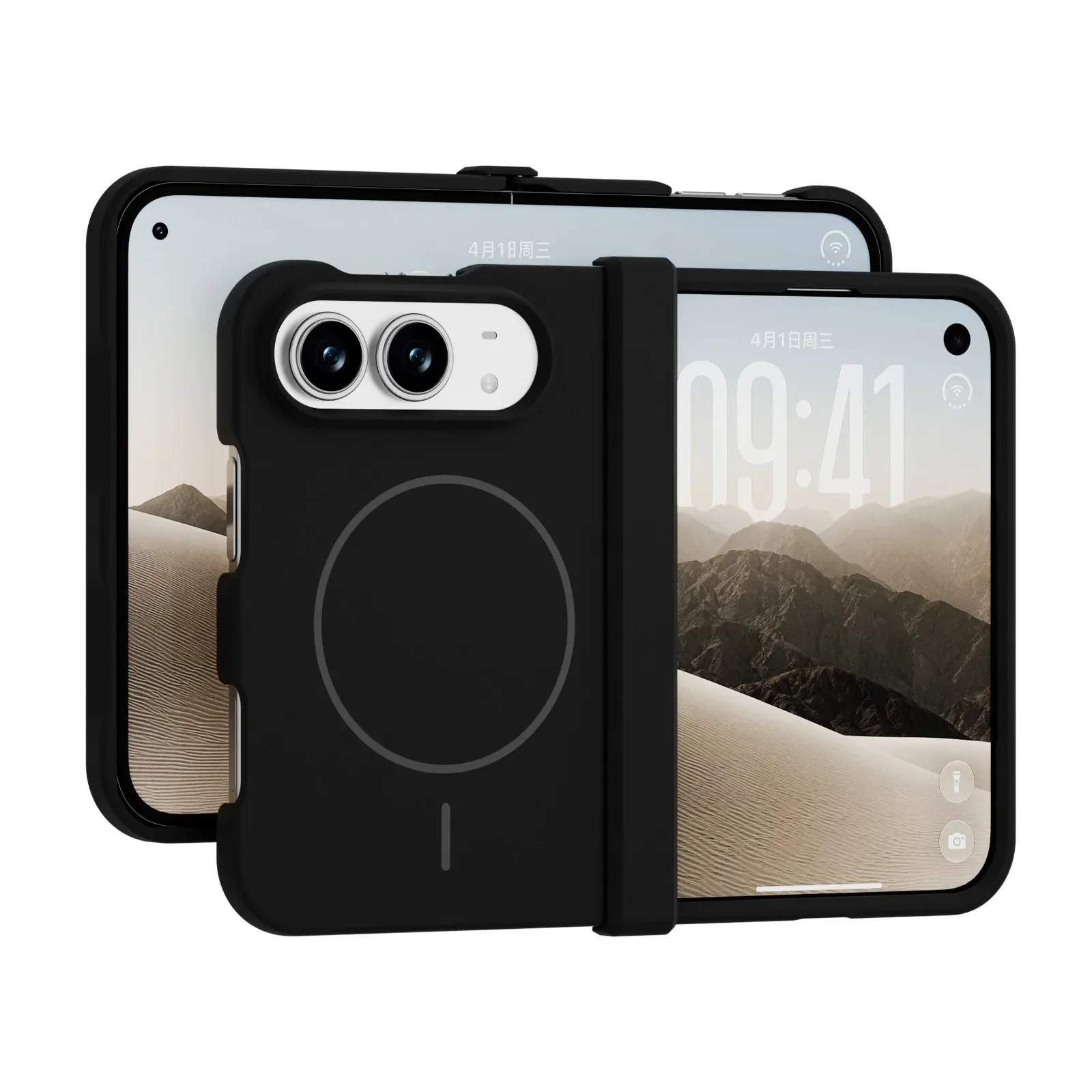
- Want the premium feel? Stock the liquid silicone case — soft-touch, microfiber lining, no stand.
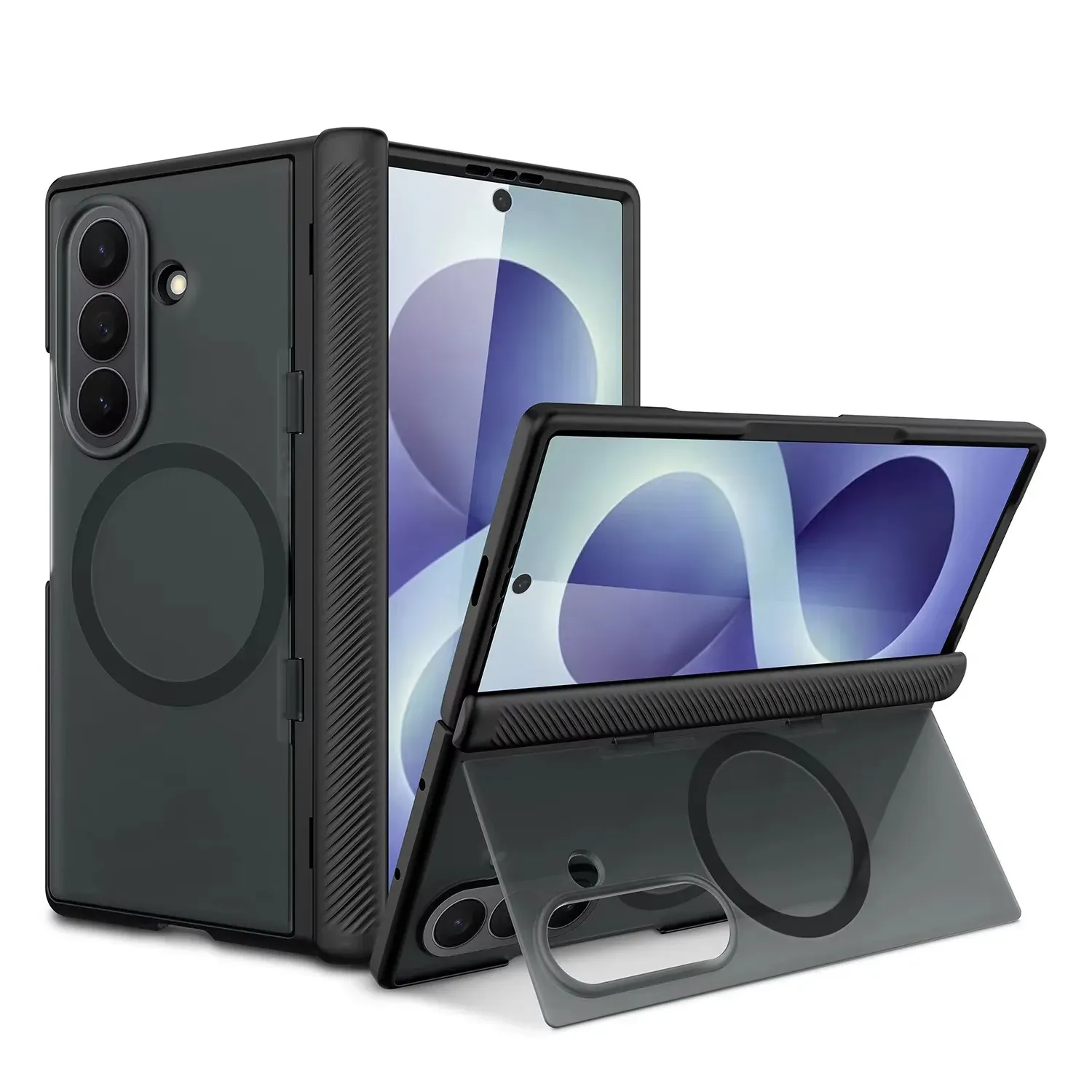
- Want hands-free viewing? Stock the kickstand case — TPU+PC, fold-out stand, same hinge cover and MagSafe.
- Stocking both kinds of buyer? Split one 100-piece order across the two instead of guessing.
This guide is for distributors, marketplace sellers, retailers and private-label buyers who carry the iPhone Duo. It covers what the two cases actually share, where they genuinely differ, which one fits which channel, what a wrong pick costs you, and how to test samples before bulk production.
What do the two cases share?
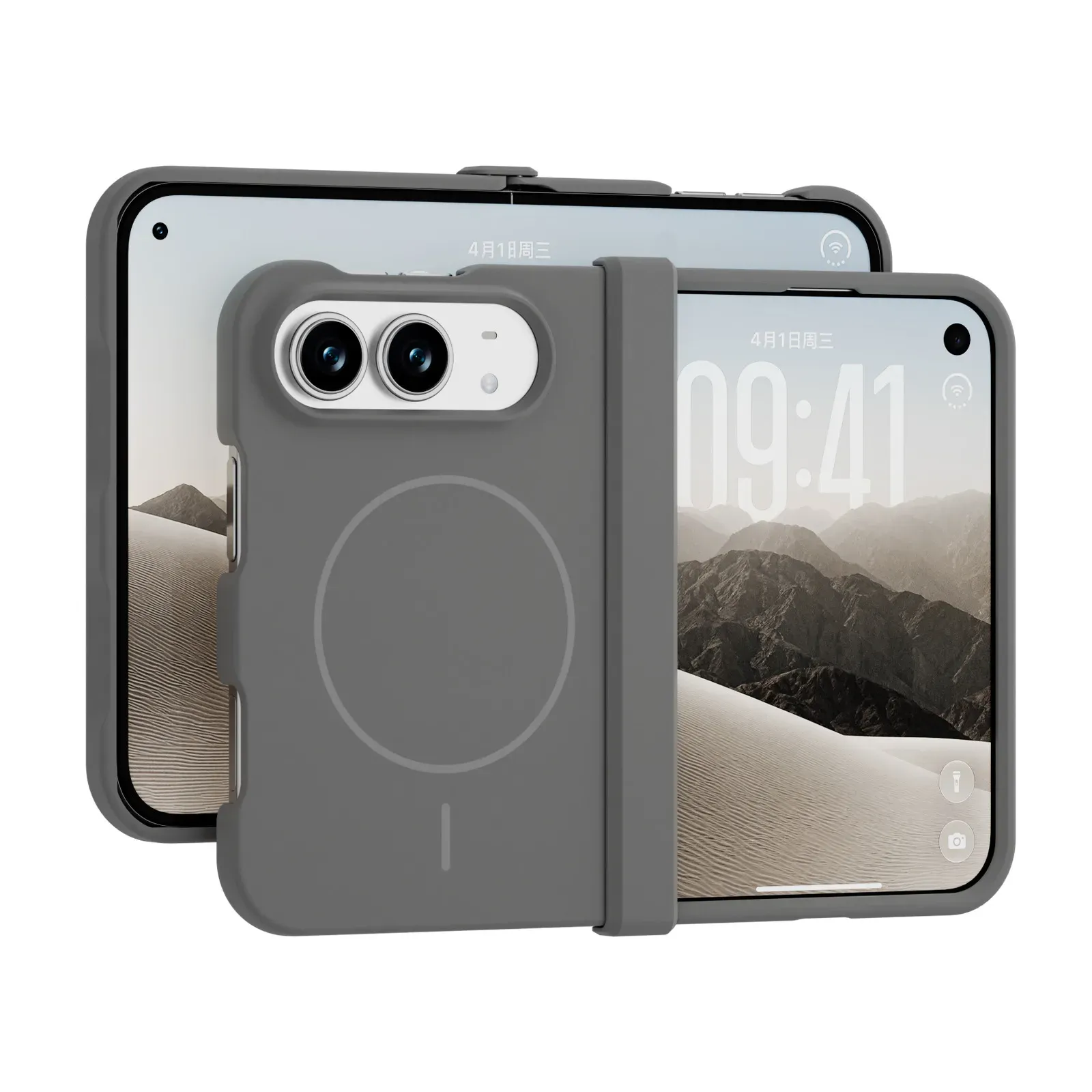
More than buyers expect, which is exactly why they get mixed up. Both are made for the iPhone Duo only, and both start from the same idea: on a foldable, the hinge is the part that takes the wear, so the case has to cover it without blocking the fold.
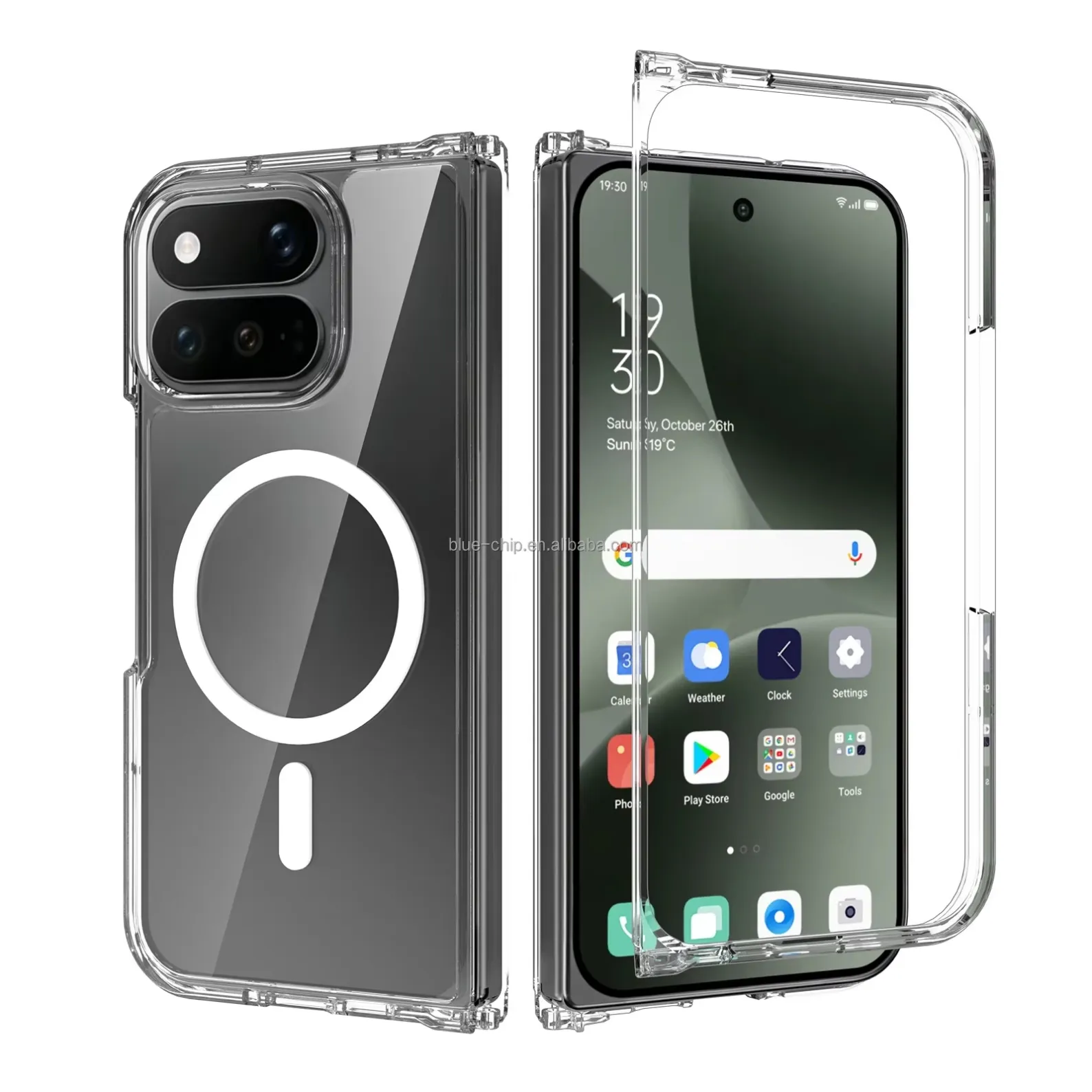
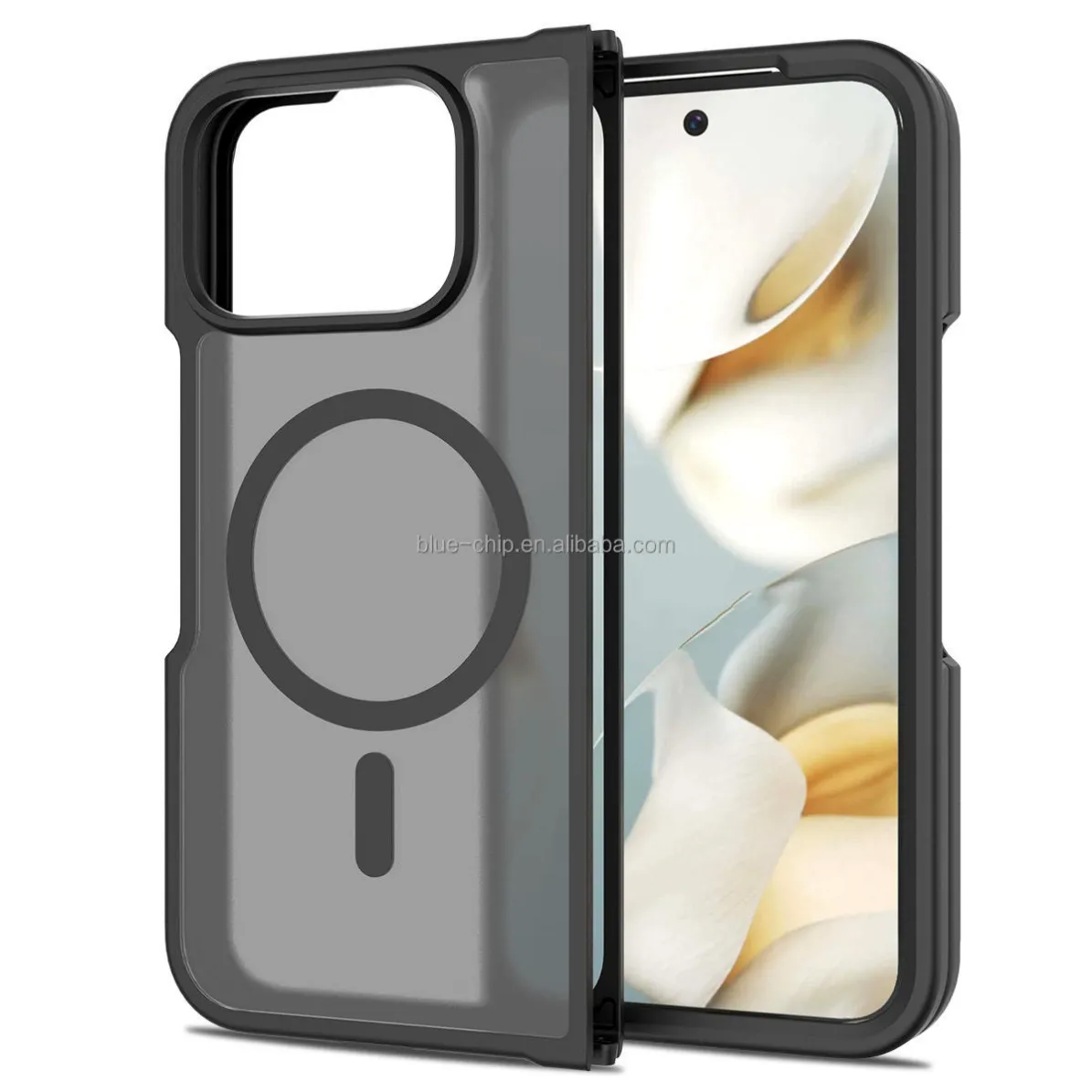
Both have a fitted hinge cover that follows the fold line, so the phone opens and closes as usual with the case installed, while the hinge area stays covered against dust and light knocks. Both have a built-in magnetic ring, so MagSafe chargers, wallets and car mounts snap on in the right place and wireless charging works through the case. Both are matte and fingerprint-resistant, both come with the same ordering terms — 100 pieces per order, 20 pieces per model per colour, samples in 3–5 days, bulk production in 15–20 days, 30% deposit with the balance before shipment — and both can be made in custom colours with logo printing or laser engraving and branded packaging.
So if a customer asks "does it protect the hinge and work with my MagSafe charger?", the answer is yes for either one. The buying decision starts after that question, not before it.
What actually differs between the two cases?
The deciding difference is the material, and the material decides three things: feel, the stand, and daily care.
The silicone model is the Liquid Silicone MagSafe Hinge Case for iPhone Duo. The outside is liquid silicone over an inner PC frame, lined with microfiber so the phone back does not get scuffed. It has a smooth, silky surface and a softer, more cushioned feel than TPU or hard plastic, with a secure grip and a premium look in the hand. That is its whole selling story — and it is also its one honest drawback, stated on the product page itself: like most silicone, the surface can pick up lint in pockets and bags. A damp cloth or lint roller removes it in seconds, but a customer who was never told will still write in about it. Most importantly for your listing: this version has no kickstand. Its own FAQ says so plainly, and your listing should too.
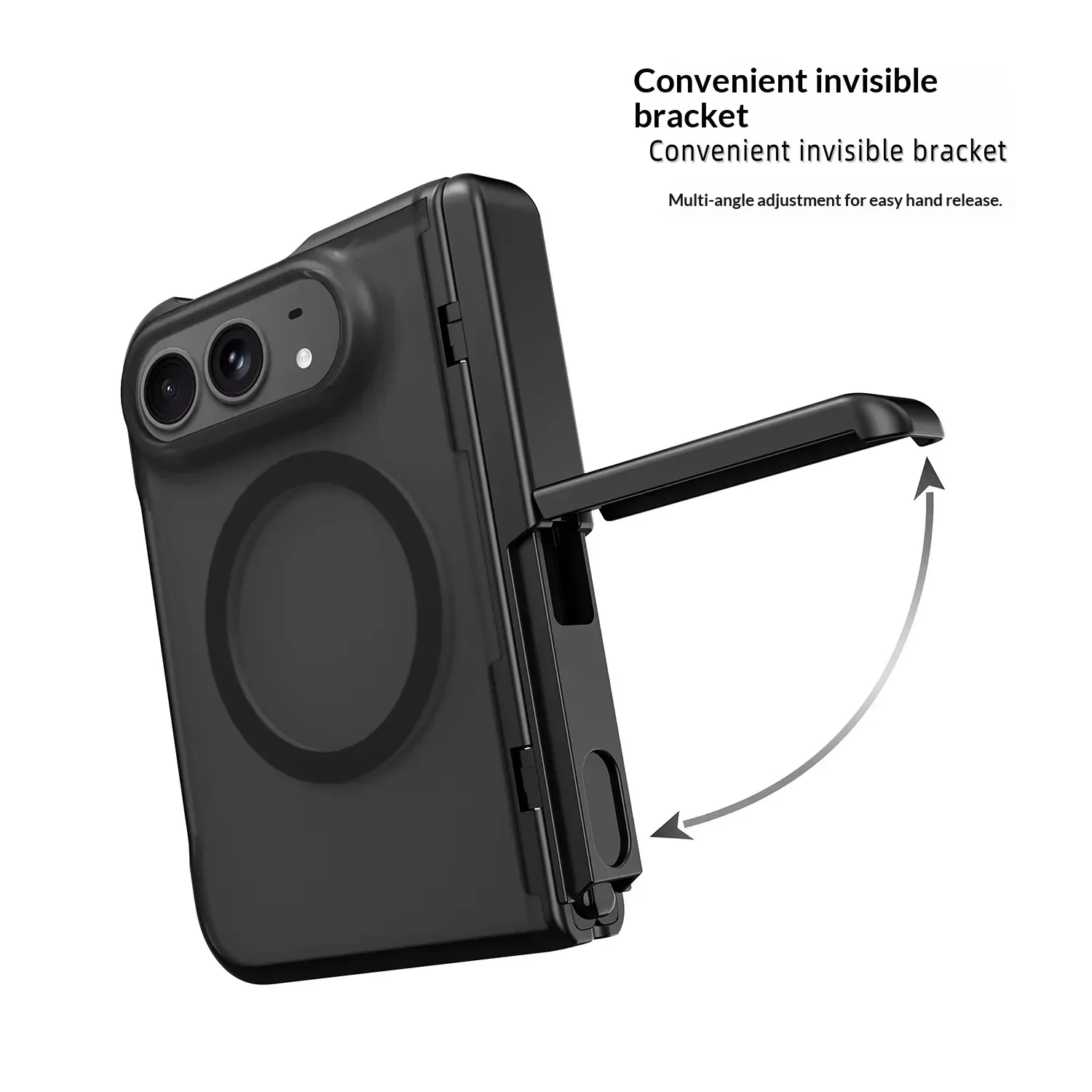
The kickstand model is the Full Hinge Protection MagSafe Kickstand Case for iPhone Duo. It is TPU+PC: a rigid PC shell for structure and scratch resistance, bonded to a soft-touch matte TPU frame that absorbs drop energy and gives a dry grip. The stand folds out of the back and holds the phone upright for video calls, streaming or hands-free reading. It has the same full hinge cover and the same built-in magnetic ring as the silicone version. What it does not list is a microfiber lining — the lining is stated for the silicone version only, so do not promise it on this one.
Put side by side, the choice is simple to state and easy to get wrong in a listing: silicone wins on feel, kickstand wins on function. Neither wins on hinge protection or MagSafe, because both have those. For the background on why the hinge cover matters at all, read our guide to hinge protection on a foldable case before you compare samples.
Which one should your channel stock?
That depends on what your customers ask for at the counter — or type into your shop's search box. There is no universal winner, and any supplier who gives you one without asking about your channel is guessing with your money.
If you run a physical shop, let customers hold both samples. Silicone sells itself in the hand: the first ten seconds of holding it are the pitch. If your walk-in customers care about feel and looks — gifts, premium retail, customers who pick a case the way they pick a wallet — the silicone version is your first stock. If they ask "can it stand up on my desk?" before they ask anything else, the kickstand version is.
If you sell on marketplaces, stock the model your search terms point to, and name the stand — or its absence — in the title, not buried in paragraph four. A buyer searching "iPhone Duo case with stand" who lands on the silicone page will return it, not because the case is bad, but because the listing let them believe a stand was in the box. The two anti-return lines in the next section exist for exactly this reason: paste them, do not paraphrase them away.
If you distribute to other retailers, carry both, but keep them apart from day one: separate SKUs, separate shelf labels, separate packaging. Most mix-ups we hear about did not happen at the factory. They happened in a warehouse where two similar cases for the same phone shared one bin — and with these two, the boxes look even more alike, because the phone, the hinge cover and the MagSafe ring are the same on both.
If you are building a private label, decide the feature story first. "Soft-touch silicone, premium in the hand" and "stands on your desk and snaps to your charger" are two different adverts. Print one story per box, and print the exact product name next to it — packaging is the most expensive place to discover a mix-up.
What goes wrong if you order the wrong one — and what it costs
A wrong pick rarely fails loudly. The cartons arrive, the count is right, the colours are right. The bill arrives later, in pieces.
Work it out with your own numbers before you order: units affected × your landed cost per case, plus any printed packaging you have to throw away, plus return shipping and refund handling on the units already sold, plus the staff time to relabel and re-list. For most buyers the packaging and returns lines hurt more than the cases themselves — and all four lines are avoidable with one sample round.
The quieter cost is trust. iPhone Duo owners spend more than standard phone-case customers, and they know exactly what they expected from the case they ordered. Shipping a silicone case to a customer who wanted a stand does not read as a small error. It reads as a shop that does not know its own products — a hard first impression to buy back in a category built on repeat orders. The same applies in reverse: a customer who paid for premium feel and got hard plastic will not come back for the silicone version. They will go to a shop that stocks it.
Already comparing quotes for these two cases? Send us the split you have in mind — how many of each, which colours, silicone or kickstand — through our contact page, and we will confirm you are quoting the right SKU for each before you pay a deposit anywhere. It takes one message, and it is much cheaper than a relabel.
Copy this onto your own listing to stop returns
You are welcome to use these two lines word for word on your shop or marketplace listing. They take ten seconds to paste and they prevent the two complaints this pair gets most:
For the silicone model: "Liquid silicone MagSafe hinge case for iPhone Duo. No kickstand. Soft-touch finish with microfiber lining; wipe lint with a damp cloth."
For the kickstand model: "TPU+PC MagSafe hinge case for iPhone Duo with built-in fold-out kickstand. Soft-touch matte finish — not liquid silicone."
Notice what both lines do: they name the feature that is NOT there, not just the ones that are. That second half is the part most listings leave out, and it is the half that stops the wrong customer from ordering.
Test the samples like this, before bulk production
Order one sample of each — not just the one you think you need. Samples normally take 3–5 days, and the pair side by side is the cheapest training your team will ever get.
When they arrive, keep them labelled. It sounds obvious; it is also the step that gets skipped, and two unlabelled iPhone Duo cases on one desk is how the mix-up starts again. Then run through the same checks on each: fit it on the real phone; open and close the phone ten times and watch the hinge cover sit flat; on the kickstand case, fold the stand out and set the phone down on it at the angle your customers will actually use; on the silicone case, slip it in and out of a pocket a few times and check the lint, then wipe it clean with a damp cloth; put each case on a magnetic charger and lift the phone — the case should hold, not slide off.
Anything feel off — a hinge cover that does not sit flat, a stand that will not hold the angle — raise it before bulk production, while it is still a conversation. We do not treat a listing as a promise of fit until a case has been checked on the device or a confirmed sample, and you should not either. Our foldable phone case sourcing checklist covers the supplier-side questions to ask at the same stage.
A first order you can actually place
You do not have to bet the whole budget on one material. The minimum order is 100 pieces per order and 20 pieces per model per colour, and bulk production runs 15–20 days.
Example, using round numbers: 60 pieces of the kickstand case in three colours (20 each) and 40 pieces of the silicone case in two colours (20 each). That is one 100-piece order, both materials covered, every line exactly at the per-colour minimum. Sell for a few weeks, see whether your market buys feel or function, and come back heavier on that one. That is a calmer first order than 100 pieces of a material you picked from a thumbnail.
Frequently asked questions
Does the liquid silicone iPhone Duo case have a kickstand?
No. The liquid silicone version has a fitted hinge cover and MagSafe, but no stand. If your customers need a built-in stand, the TPU+PC kickstand version in the same iPhone Duo range is the one to stock.
Does the kickstand version have a microfiber lining?
Not as stated. The microfiber lining is listed for the liquid silicone version, which has an inner PC frame lined with microfiber. The kickstand version is listed as TPU+PC with a soft-touch matte finish, with no lining stated — so do not promise one on your listing.
Do both cases work with MagSafe chargers and wireless charging?
Yes. Both have a built-in magnetic ring, so MagSafe chargers, wallets and car mounts snap on in the right place, and wireless charging works through the case with no need to remove it first.
Which one should I stock first?
The one your customers already ask for. Feel and premium retail point to the silicone case; hands-free viewing, video calls and desk use point to the kickstand case. If you hear both, split a first order across the two.
Does the silicone case pick up lint?
It can, like most silicone. The surface may collect lint in pockets and bags, and a damp cloth or lint roller removes it in seconds. Tell customers this before they buy and it stays a care note instead of becoming a return.
What is the minimum order if I want both versions?
100 pieces per order, with 20 pieces per model per colour. That means you can split one order across the silicone and kickstand versions instead of committing to a single material, and samples normally take 3–5 days.
Send us the split — we will check the SKUs before you order
Copy this message, fill in the five lines, and send it through our contact page or WhatsApp. We will reply with the right case for each version, a quote, and the current sample timing:
"Hi, we sell in [country / market]. We need: iPhone Duo liquid silicone MagSafe hinge case × [quantity], iPhone Duo MagSafe kickstand case × [quantity]. Colours: [colours]. Packaging: [standard / our own design]. Please send sample and bulk prices."
That is all we need to start. No catalogue tennis, no guessing which case you meant — the split is in the message, and the first reply can already be a usable quote.